
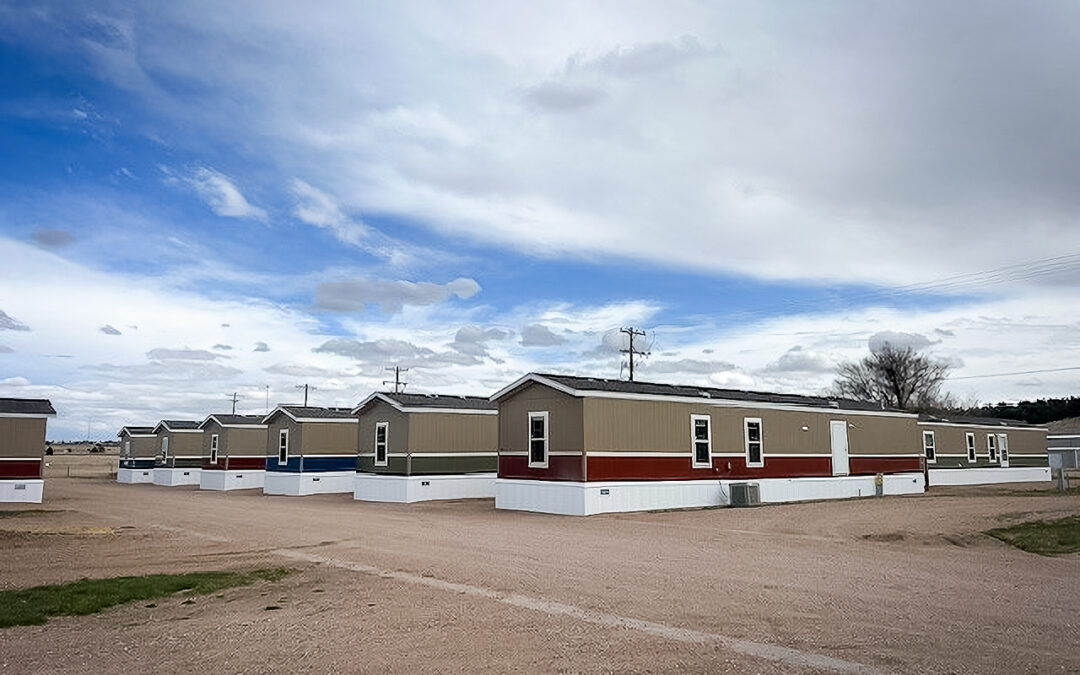
If you work in oil and gas, construction, energy, infrastructure, or another industry that regularly sends crews to remote job sites, you have probably heard the term “man camp.” Despite the informal name, a modern man camp is essentially workforce housing designed to give employees a practical place to live while they are working away from home. Instead of arranging separate hotel rooms or leaving workers to find temporary rentals on their own, employers can use dedicated workforce lodging that is built around the realities of extended projects and demanding schedules.
At Iron Guard Housing, we understand that temporary housing needs to function as more than somewhere to sleep at the end of a shift. Workers may be staying for weeks or months, which means access to everyday conveniences can make a significant difference. Our storage options in Odessa and Pecos are part of a larger approach to supporting crews that need organized, comfortable accommodations while working away from home. For teams whose projects take them elsewhere, our storage options in Kimball also provide a look at how we approach workforce lodging in another active work region.
Although the phrase “man camp” remains common in industries such as oil and gas, these accommodations are not limited to men. Workforce housing can serve employees and crews who need temporary lodging close enough to their project area to make daily routines manageable. Understanding what a man camp actually provides can therefore help both workers and project managers make better decisions about accommodations before an assignment begins.
Key Points for Readers Short on Time
- A man camp is temporary workforce housing commonly used by oilfield, construction, energy, and other project-based crews.
- Modern workforce lodging can provide furnished living spaces along with utilities, WiFi, laundry facilities, housekeeping, parking, and other everyday conveniences.
- Man camps are particularly useful when projects are located far from a worker’s permanent residence or where conventional lodging is less practical for an extended assignment.
- Location matters because shorter, more manageable travel between lodging and the general work area can simplify everyday routines for crews.
- Workers staying around Odessa, Pecos, Ozona, and San Angelo can also find museums, parks, historic attractions, and outdoor recreation when they have time away from the job.
So, What Exactly Is a Man Camp?
A man camp is a form of temporary housing created primarily for workers assigned to projects away from their permanent homes. These facilities are especially familiar in industries that depend on large crews working in regions where housing demand can change quickly as projects begin, expand, or wrap up. Oilfield operations are a familiar example, although construction, pipeline, utility, infrastructure, and energy projects can create similar accommodation needs. The concept has been around for decades, but workforce camps can vary considerably in their design and level of comfort. Some are relatively basic accommodations intended primarily for sleeping and meals, while others provide private bedrooms or bathrooms, furnished living areas, laundry facilities, internet access, parking, housekeeping, and other services that make an extended assignment easier to manage. These communities can be configured in different ways depending on workforce size, project requirements, and the expected duration of the job.
That distinction is important because the words “man camp” can create an outdated mental image of rows of extremely basic trailers with few conveniences. Today’s workforce housing can be much closer to temporary residential living. The objective is straightforward: workers need a dependable place where they can eat, clean up, manage their belongings, communicate with family, and rest between shifts.
Why Do Oilfield and Industrial Crews Use Man Camps?
Many major industrial projects do not happen next door to large residential neighborhoods with abundant short-term rentals. Oil and gas operations in particular can bring sizable crews into an area for a specific period. Those employees still need reliable accommodations, even when their permanent homes may be hours away or in another state. That is where workforce housing becomes useful. Instead of approaching accommodation as a collection of individual hotel reservations, a company can house multiple members of its team in an environment designed around longer work assignments. Workers gain a consistent place to return to, while employers have a more organized housing arrangement for personnel assigned to the project.
The length of the assignment can vary as well. A worker may need accommodations for a relatively short project, while another crew could remain in the area for a much longer period. At Iron Guard Housing, we accommodate temporary workforce needs with options designed around different project timelines rather than assuming every crew will have the same schedule. For workers and managers specifically considering the Permian Basin, our guide to what to know before booking workforce housing in Odessa, TX goes deeper into the questions worth considering before choosing accommodations.
What Does a Modern Man Camp Look Like?
There is no single blueprint for every man camp. The layout depends on the operator, location, workforce, and project, but the underlying idea is to create housing that supports workers during an assignment rather than making temporary living unnecessarily complicated. At our Odessa and Pecos locations, for example, we offer fully furnished workforce lodging with two-bedroom and two-bathroom units as well as three-bedroom and three-bathroom options. Private bathrooms help workers maintain personal space, while furnished accommodations remove the need to transport an entire household simply to complete a temporary assignment.
We also understand how important the smaller parts of everyday life become during an extended stay. Our individual units include full-size washers and dryers, household-stocked cupboards, linens, WiFi and internet access, utilities, and other residential conveniences. Weekly housekeeping and linen services further reduce the amount of off-shift time workers need to spend managing basic household chores. For someone accustomed to a conventional storage facility or storage unit, workforce housing serves a very different purpose. A storage unit is intended primarily to keep belongings in a designated space, whereas workforce lodging is designed around people actually living there throughout a project. Workers need space for personal belongings, but they also need bathrooms, laundry, utilities, connectivity, furniture, and areas where they can settle in between shifts.
The Amenities That Matter During a Longer Assignment
Amenities may seem secondary when someone is booking a short overnight stay, but their importance changes considerably when that stay stretches into weeks or months. A worker who repeatedly has to leave the property to do laundry, find internet access, or take care of basic errands can lose valuable personal time after already completing a demanding shift. For this reason, practical amenities are a central part of our approach to workforce lodging. At our Odessa and Pecos locations, workers can have access to features such as private bathrooms, full-size in-unit washers and dryers, WiFi, furnished living spaces, linens, utilities, housekeeping, and designated parking. We also provide an on-site management office and ground supervision, while 24-hour ground security adds another layer of support to the living environment.
The goal is not luxury for the sake of luxury. It is practicality. When essential parts of everyday living are already accounted for, workers can spend less of their off time solving housing-related problems. That becomes increasingly important the longer an assignment lasts. Those who want more specific answers about day-to-day accommodations can also read our complete FAQ about what to expect from an oilfield man camp in Odessa, where we address common questions that can come up before a stay.
Why Location Matters for Workforce Housing
Choosing workforce lodging is partly about the accommodations themselves, but geography matters too. West Texas covers an enormous area, and communities such as Odessa, Pecos, Ozona, and San Angelo play different roles for people working throughout the region. A lodging arrangement should make sense in relation to the project rather than simply being the first available room someone finds online. Odessa is closely associated with the Permian Basin and the industries that support it, making workforce accommodations particularly relevant for crews assigned to projects throughout the surrounding area. For workers spending an extended period here, the city also has places to visit during genuine downtime. Odessa attractions include the Ellen Noël Art Museum of the Permian Basin, the Globe of the Great Southwest, and the city’s Stonehenge replica, giving workers options beyond simply returning to their accommodations whenever a shift ends.
Pecos has an equally distinctive West Texas identity. Workers with enough free time can learn more about local history at the West of the Pecos Museum, which occupies the historic Orient Hotel and Number 11 Saloon and includes exhibits covering ranching, railroads, rodeo history, and the cultural heritage of the region. Ozona offers another perspective on West Texas life. The community is closely connected to the ranching heritage and open spaces that characterize this part of the state. For someone assigned to a project in or around the area, having opportunities to explore local parks, community spaces, and regional history can make time away from work feel more like genuine downtime.
Farther east, San Angelo offers additional opportunities for recreation and exploration. The City of San Angelo has destinations such as Fort Concho, the International Water Lily Collection, Lake Nasworthy, local parks, and the Red Arroyo Trail. These kinds of places can be especially welcome for workers who have an extended break and want to get outside, explore the region, or simply spend a few hours away from their normal work routine.
Man Camps Can Help Create a More Consistent Routine
One of the less obvious advantages of workforce housing is consistency. Extended assignments can disrupt the routines workers normally rely on at home. Meal schedules change, personal belongings have to fit into a temporary living arrangement, laundry becomes another logistical task, and even something as simple as reliable internet access can suddenly matter much more. A well-equipped man camp helps restore some of that predictability. Instead of changing hotels, continually searching for accommodations, or adapting to a room that was primarily designed for a few nights, workers can establish a temporary home base. Clothes and personal belongings can stay organized, laundry can become part of a routine, and workers know where they are returning at the end of the day.
This is also why furnished accommodations matter. Bringing furniture, appliances, linens, and other household necessities to a temporary assignment would create unnecessary work for many employees. Providing these essentials allows workers to arrive with their personal belongings and settle into the space much more easily.
Are Man Camps Only for Oilfield Workers?
Oil and gas operations are strongly associated with the term, particularly in regions with extensive energy production, but the basic workforce housing model has broader applications. Any industry that temporarily brings employees into a project area can encounter similar lodging challenges. Construction companies, infrastructure contractors, energy crews, maintenance teams, and other project-based organizations may all need temporary accommodations. The specific needs of those teams can differ, but the underlying problem is similar: employees are working away from their permanent homes and need a dependable place to live for the duration of the assignment. The term “workforce housing” is therefore often a more useful way to understand the concept. It describes what the accommodations actually accomplish rather than limiting them to one industry or type of worker.
Man Camp vs. Hotel: What Is the Difference?
A hotel can make sense for a brief trip. When an employee only needs a room for a few nights, there may be little reason to think about a larger residential setup. However, longer assignments change the equation. Workforce lodging is generally structured around the needs that become more noticeable during extended stays. A furnished unit, private bathroom, full-size laundry equipment, internet access, utilities, parking, linens, and housekeeping can create a more practical routine than repeatedly managing the limitations of short-stay accommodations.
There is also the question of the team itself. A project may require housing for many employees at once. Keeping workforce lodging organized in a dedicated location can provide greater consistency than scattering employees among different properties depending on individual room availability. That does not mean one type of lodging is automatically right for every project. The best arrangement depends on the assignment length, crew size, work location, transportation needs, desired amenities, and budget. Asking those questions early makes it easier to identify accommodations that actually fit the project.
What Should Employers Consider Before Choosing a Man Camp?
Housing decisions can affect more than where employees sleep. Before arranging workforce accommodations, employers should think carefully about how the property will function throughout the entire assignment. Location should be considered in relation to the work area, while the expected duration of the project can help determine what kind of agreement makes sense. Crew size matters because an employer needs sufficient capacity without creating unnecessary complications. Parking is another practical consideration, particularly when workers use company trucks or other work vehicles.
Amenities deserve attention as well. Laundry access, private bathrooms, internet connectivity, furnished rooms, utilities, housekeeping, linens, and management support may all influence how practical the accommodations feel after several weeks. Employers should also understand exactly what is included before workers arrive rather than discovering gaps after the project has begun. Finally, consider what employees will do with the limited free time they have. Access to local restaurants, parks, museums, recreation, and other community resources can help workers make better use of their time away from the job. A workforce housing decision works best when it accounts for daily life as a whole rather than focusing only on a bed.
A Man Camp Is Really About Making Temporary Work Feel More Manageable
The simplest answer to “What is a man camp?” is temporary housing for people working away from home. The fuller answer is that modern workforce lodging is intended to make an extended assignment easier to manage by bringing important parts of everyday living into one consistent environment. At Iron Guard Housing, we know crews may arrive with demanding schedules and limited time to manage everything outside of work. That is why our approach to workforce accommodations includes furnished living spaces and practical amenities that help employees establish a routine while they are away from home. Workers and employers can explore man camps from Iron Guard Housing to better understand our overall approach, while those focused on specific locations can review accommodations and related information through our Pecos, Odessa, and Kimball workforce lodging options.
For crews working throughout Odessa, Pecos, and the surrounding West Texas region, the right workforce housing arrangement can provide something particularly valuable during a temporary assignment: consistency. A comfortable place to return to, practical everyday amenities, room for personal belongings, and access to the surrounding community can make life away from home considerably easier to manage.